Diploma in Electrical Engineering
A career-focused 3-year polytechnic engineering programme providing hands-on training in electrical machine operations, substation maintenance, power distribution, domestic and industrial wiring, and motor control panels.
Quick Programme Facts
Programme Overview
The 3-Year Polytechnic Diploma in Electrical Engineering at Modern Institute of Engineering & Technology (MIET) equips students with the technical skills needed to install, operate, maintain, and troubleshoot electrical power equipment and industrial machinery. Approved by AICTE and affiliated with WBSCTVESD, our curriculum emphasizes extensive laboratory experimentation on rotating machines, transformers, switchgear protection panels, and industrial wiring systems.
Three-year polytechnic engineering diploma structured across 6 semesters following the official WBSCTVESD curriculum.
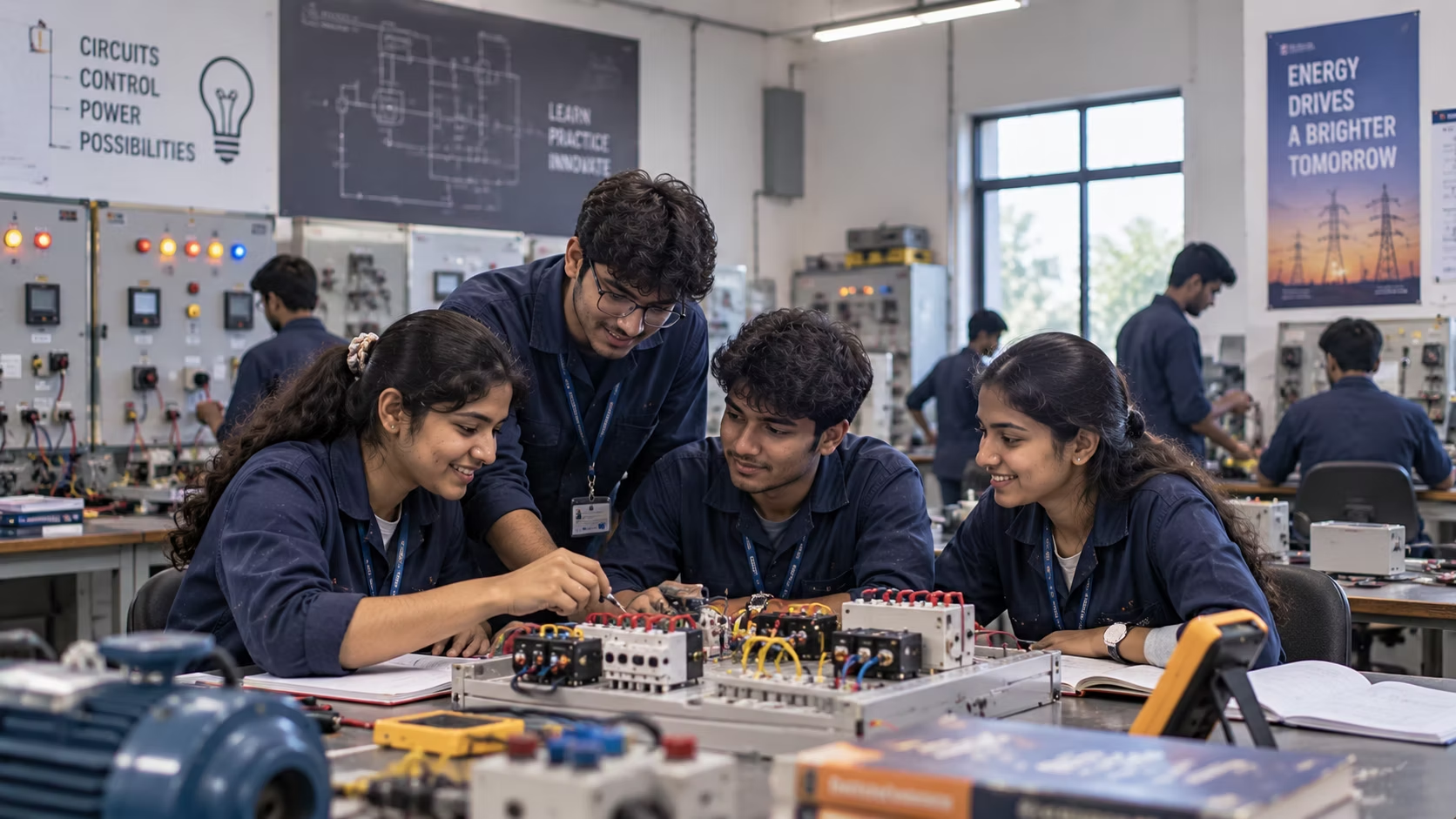
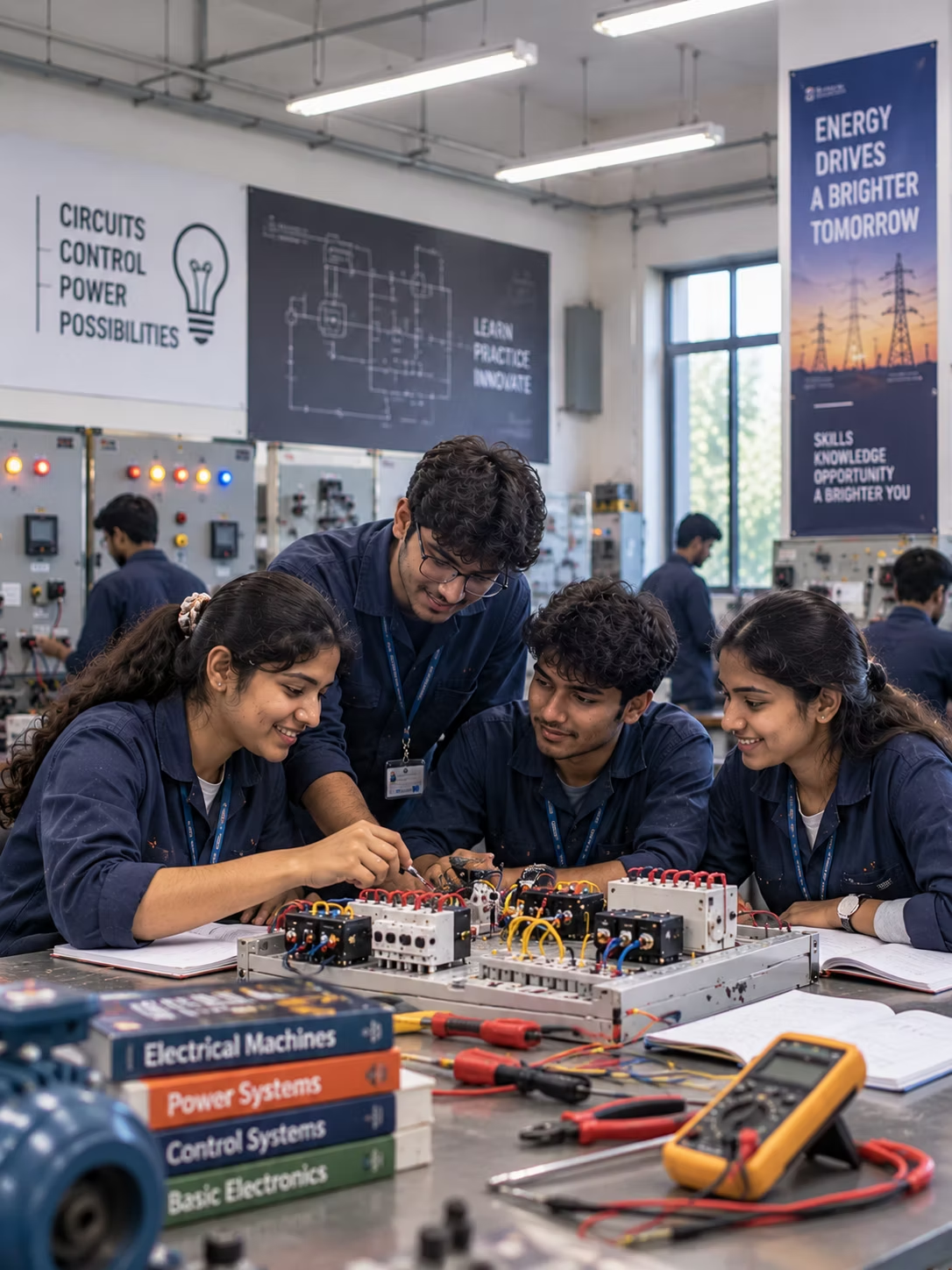
Comprehensive Electrical Machines Laboratory featuring synchronized motor-generator test beds, transformers, and load banks.
Practical training in industrial wiring, motor starter circuits (DOL, Star-Delta), protective relays, and earthing standards.
Direct pathway for higher education: Diploma holders are eligible for direct Lateral Entry into 2nd Year (3rd Semester) B.Tech via JELET.
Why Study Diploma in Electrical Engineering at MIET?
Electrical technicians form the backbone of power distribution networks, manufacturing plants, electric mobility, and infrastructure projects. MIET Bandel provides modern equipment, safety-first training, and experienced faculty mentors to ensure strong career readiness.
Hands-on electrical machinery lab equipped with DC shunt motors, alternators, 3-phase induction motors, and variable loading banks.
Practical training in domestic and industrial wiring booths, motor rewinding practices, and switchgear protection relays.
Dedicated computer-aided circuit simulation laboratory for single-line diagrams (SLD) and electrical power calculations.
Institutional Book Bank facility providing core polytechnic textbooks to every student for the entire semester duration.
Structured technical mentoring for Junior Engineer (JE) competitive examinations including WBSEDCL, WBSETCL, and Railway Recruitment Boards (RRB JE).
Programme Highlights
Differentiating academic modules designed to build high-demand technological competencies.
Electrical Machines & Motor Testing
Hands-on operation, load testing, speed control, and open/short circuit tests on transformers and rotating machines.
Power Transmission & Substation Ops
Study of overhead line conductors, underground cables, substation busbars, lightning arresters, and earthing grids.
Switchgear & Relay Protection
Testing thermal overcurrent relays, miniature circuit breakers (MCBs), contactors, and electromagnetic trip switches.
Industrial Wiring & Control Panels
Assembly and troubleshooting of Direct-On-Line (DOL) and Star-Delta starter panels for 3-phase industrial motors.
Eligibility Criteria
Candidates seeking admission to the 3-Year Polytechnic Diploma in Electrical Engineering must fulfill the academic prerequisites laid down by WBSCTVESD and AICTE.
Lateral Entry & Verification Notes
- •Lateral Entry: Candidates who have passed 10+2 (Vocational / Technical) or 2-Year ITI in Electrician / Wireman trades can apply directly for 2nd Year (3rd Semester) admission through VOCLET counseling.
- •Physical verification of original academic marks sheet, admit card, domicile, and medical fitness is mandatory during on-campus enrollment.
Admission Procedure & Guidelines
Admissions are facilitated through the WBSCTVESD centralized online counseling portal (JEXPO), alongside institutional management quota seats.
Appear for JEXPO entrance examination conducted by WBSCTVESD and secure an eligible rank.
Register on the WBSCTVESD centralized online counseling portal during the choice-filling window.
Select Modern Institute of Engineering & Technology (MIET) - Diploma in Electrical Engineering as your preferred choice.
Upon allotment, report to the MIET Bandel admission cell with your documents, photographs, and allotment letter for enrollment.
Programme Fee Structure & Semester Schedule
Official institutional fee breakdown for Academic Session 2026-27 approved for Polytechnic Diploma. All semester fee schedules are transparently published without hidden charges.
3-Year Diploma & Lateral Entry Fee Schedule
| Discipline | Total Fees | Admission + 1st Sem | 2nd Sem | 3rd Sem | 4th Sem | 5th Sem | 6th Sem |
|---|---|---|---|---|---|---|---|
| 1st Year Regular Admissions (4-Year Programme) | |||||||
Mechanical EngineeringDME, 1ST 1st Year Admission | ₹1,00,000 | ₹45,000 | ₹11,000 | ₹11,000 | ₹11,000 | ₹11,000 | ₹11,000 |
Electrical EngineeringDEE, 1STThis Course 1st Year Admission | ₹1,00,000 | ₹45,000 | ₹11,000 | ₹11,000 | ₹11,000 | ₹11,000 | ₹11,000 |
Civil EngineeringDCE, 1ST 1st Year Admission | ₹90,000 | ₹35,000 | ₹11,000 | ₹11,000 | ₹11,000 | ₹11,000 | ₹11,000 |
Computer Science & TechnologyDCST, 1ST 1st Year Admission | ₹85,000 | ₹30,000 | ₹11,000 | ₹11,000 | ₹11,000 | ₹11,000 | ₹11,000 |
Electronics & Communication EngineeringDECE, 1ST 1st Year Admission | ₹75,000 | ₹20,000 | ₹11,000 | ₹11,000 | ₹11,000 | ₹11,000 | ₹11,000 |
| Lateral Entry Admissions (VOCLET — Direct 2nd Year Admission) | |||||||
Mechanical EngineeringDME, VOCLET Lateral Admission (VOCLET) | ₹85,000 | ₹40,000 Initial Entry Fee | — | — | ₹15,000 | ₹15,000 | ₹15,000 |
Electrical EngineeringDEE, VOCLETThis Course Lateral Admission (VOCLET) | ₹85,000 | ₹40,000 Initial Entry Fee | — | — | ₹15,000 | ₹15,000 | ₹15,000 |
Civil EngineeringDCE, VOCLET Lateral Admission (VOCLET) | ₹80,000 | ₹35,000 Initial Entry Fee | — | — | ₹15,000 | ₹15,000 | ₹15,000 |
Computer Science & TechnologyDCST, VOCLET Lateral Admission (VOCLET) | ₹70,000 | ₹30,000 Initial Entry Fee | — | — | ₹15,000 | ₹15,000 | ₹15,000 |
Electronics & Communication EngineeringDECE, VOCLET Lateral Admission (VOCLET) | ₹65,000 | ₹25,000 Initial Entry Fee | — | — | ₹15,000 | ₹15,000 | ₹15,000 |
Curriculum & What You Will Study
Three-year polytechnic engineering curriculum prescribed by WBSCTVESD, balancing classroom fundamentals with intensive workshop practice and laboratory training.
Semester 1
Applied sciences, basic mathematics, and introductory engineering workshop practices.
Core Subjects & Laboratories (7 modules)
Core Practical Competency Domains
Foundational domains mastered throughout the four years of engineering study.
Laboratories & Practical Electrical Learning
Our electrical polytechnic laboratories provide extensive hands-on experimentation with live machines, transformer test beds, and protection panels.
Electrical Machines Lab: Coupled DC motor-generator sets, 3-phase squirrel cage and slip ring induction motors, alternators, and 3-phase transformers.
Measurements & Instrumentation Lab: Kelvin double bridge, Maxwell bridge, single/three-phase energy meters, and digital wattmeters.
Switchgear & Protection Lab: Overcurrent protective relays, differential transformer protection rigs, Earth leakage testers, and contactors.
Power Electronics Lab: SCR, MOSFET, and IGBT converter modules, speed control setups for DC and AC motors, and digital oscilloscopes.
Electrical Wiring & Workshop Bay: Industrial conduit wiring booths, PVC casing, MCB distribution boards, and motor rewinding benches.
Student Projects & Circuit Prototyping
Diploma scholars assemble, wire, and test functional hardware circuits addressing practical electrical applications.
Automatic Star-Delta Starter Panel: Student-assembled motor control panel featuring timer relays, thermal overloads, and indicator lamps.
Solar Rooftop Battery Charger: Low-cost photovoltaic battery charge regulator circuit with overcharge protection.
Substation Fault Simulator: Hardware relay trip circuit demonstrating overcurrent and earth fault isolation.
Smart Energy Saving Circuit: Automated classroom lighting control utilizing PIR motion sensors and low-power relays.
Skills Students Develop
A balanced mix of hard technical capabilities, engineering analytics, and workplace professionalism.
Technical Proficiencies
- Motor & Transformer Load Testing & Wiring
- Assembly of Motor Starters (DOL & Star-Delta)
- Switchgear Relay Testing & Fault Diagnostics
- Single-Line Diagram (SLD) Interpretation & Drafting
- Industrial Earthing & Resistance Testing
- Power Factor Correction Capacitor Sizing
- Energy Meter Calibration & Load Calculation
Professional & Workplace
- High-Voltage Safety Protocols & Personal Protective Equipment (PPE)
- Electrical Inspection & Maintenance Logging
- Technician Teamwork & Workstation Management
- Field Substation Operational Compliance
- Technical Problem Reporting & Team Presentation
Analytical & Engineering
- Electrical Power Factor & Load Balancing Analysis
- Short Circuit & Fault Current Estimation
- Cable Sizing & Voltage Drop Calculations
- Motor Efficiency & Slip Determination
Career Opportunities & Pathways
Electrical diploma engineers are vital technicians for power generation, transmission utilities, manufacturing facilities, railways, and renewable installations.
Key Job Profiles & Designations
Recruiting Industry Sectors
- •State Power Utilities (WBSEDCL & WBSETCL)
- •Indian Railways (RRB JE Electrical & Assistant Loco Pilot)
- •Power Grid Corporation of India (PGCIL) & NTPC
- •Metro Rail Corporations & Suburban Railways
- •Transformer, Switchgear & Motor Manufacturers
- •Steel Plants, Chemical Complexes & Process Industries
Higher Studies & Competitive Exams
- •Direct Lateral Entry into 2nd Year (3rd Semester) B.Tech Electrical via JELET
- •Post-Diploma Specialization in Industrial Automation & PLC
- •Associate Member of the Institution of Engineers (AMIE) Certification
* Recruitment selection depends on academic marks, trade technical evaluations, and interview results. MIET hosts campus recruitment drives with regional power, manufacturing, and electrical firms.
Industry Readiness & Employability Training
MIET collaborates with regional electrical utilities and industrial training providers to ensure graduates are practically skilled and safety-conscious.
Substation Industrial Tours: Guided field visits to regional 132kV / 33kV electrical substations in the Hooghly district.
Control Panel Wiring Sprints: Hands-on wiring drills assembling contactor panels and emergency shutoff loops.
State JE / RRB JE Competitive Coaching: Regular practice sessions covering objective technical questions, circuits, and aptitude.
Electrical Safety & First Aid Workshops: Certified training on electrical fire safety, shock hazards, and CPR rescue protocols.
Academic Resources & Infrastructure
Electrical diploma students have unrestricted access to specialized machinery testing labs, simulation facilities, and central library collections.
Practical Innovations & Prototype Development
Our polytechnic students actively investigate practical circuit designs and energy conservation models.
Solar PV Home Lighting Prototype: Fabricated compact DC solar charging system for low-power LED illumination.
Motor Overheat Protection Device: Thermistor-based cutoff circuit designed to prevent industrial induction motor winding burnouts.
Power Factor Correction Rig: Experimental capacitor bank switching circuit demonstrated in the machines lab.
Annual Project Exhibition: Showcasing innovative student-built electronic and power controller models.
Student Alumni Success
Electrical diploma alumni from MIET are serving in regional power distribution utilities, rail transit corporations, and heavy industrial plants.
“The extensive hands-on electrical machines testing and panel wiring labs at MIET gave me the practical readiness required to clear technical trade evaluations on day one.”

Ayan Saha
Junior Electrical Technician • Regional Power Utility Partner
Batch of 2024“MIET's comprehensive diploma curriculum and Book Bank facility allowed me to prepare thoroughly for JELET, achieving a top merit rank for direct 2nd-year B.Tech admission.”
Pooja Das
B.Tech Lateral Entry Scholar • Premier State University (via JELET)
Batch of 2023Authentic Programme Transparency
Verified & Approved by Polytechnic Academic Affairs CellFrequently Asked Questions: Diploma in Electrical Engineering
Find clear answers regarding MIET College admissions, academic approach, campus facilities, and research initiatives.
What is the duration and affiliation of the Diploma in Electrical Engineering?
Can electrical diploma holders pursue B.Tech engineering via lateral entry?
What machines are available in the electrical polytechnic lab at MIET?
What is the minimum eligibility for admission into Diploma Electrical?
What government jobs are open to electrical polytechnic diploma holders?
Begin Your Engineering Journey in Diploma in Electrical Engineering
Secure your seat at Modern Institute of Engineering & Technology (MIET). Approved by AICTE, affiliated with WBSCTVESD (West Bengal State Council) & AICTE, and located conveniently in Bandel, Hooghly.