
B.Tech in Electrical Engineering
A premier 4-year undergraduate engineering degree bridging classical electrical machinery, high-voltage power transmission, power electronics, renewable solar integration, and smart grid automation.
Quick Programme Facts
Programme Overview
The Department of Electrical Engineering at Modern Institute of Engineering & Technology (MIET) provides an intensive, practical education covering power generation, transmission, distribution, electrical machine design, and solid-state power electronics. Affiliated with Maulana Abul Kalam Azad University of Technology (MAKAUT) and approved by AICTE, our curriculum prepares scholars to tackle 21st-century energy challenges including smart grids, electric vehicle (EV) charging systems, and solar-wind hybrid microgrids.
Rigorous four-year engineering degree structured across 8 semesters under the MAKAUT Choice Based Credit System (CBCS).
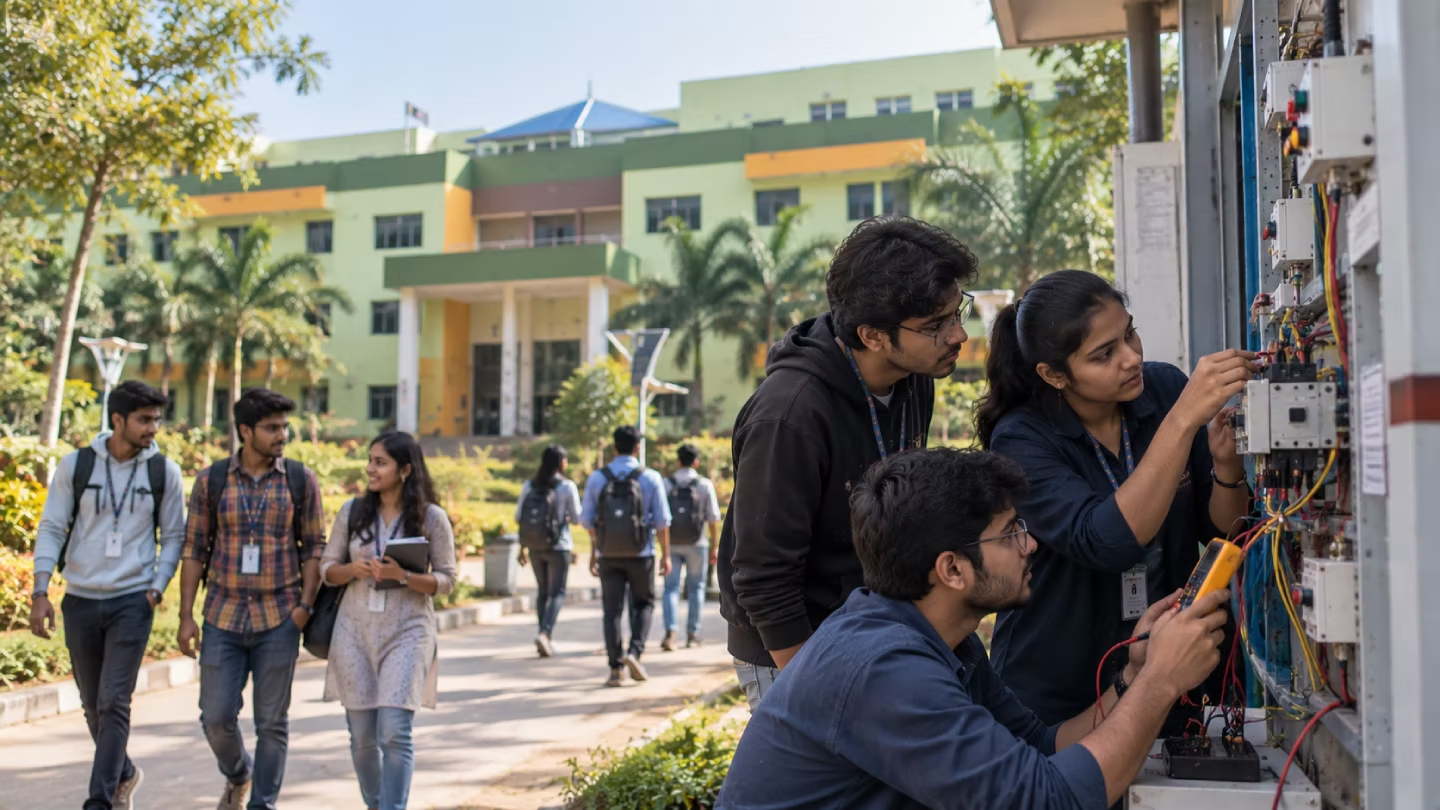
Heavy electrical machinery laboratory equipped with industrial DC shunt/series motors, three-phase alternators, induction motors, and transformers.
High-precision power electronics and simulation labs featuring MATLAB Simulink, PSPICE, and digital storage oscilloscopes.
Dedicated pre-placement coaching for power utilities (WBSEDCL, PGCIL, NTPC), electrical panel manufacturers, automation firms, and software companies.
Why Study Electrical Engineering at MIET?
Electrical engineering is the lifeblood of technological civilization. As the world transitions toward electric mobility, renewable solar parks, and smart energy grids, electrical engineers are in surging demand. MIET Bandel offers the ideal environment to master this transformative discipline.
Extensive Electrical Machines Laboratory featuring synchronized motor-generator test beds, transformer testing stations, and safety interlocks.
Modern power systems and power electronics laboratory enabling hands-on testing of thyristor inverters, buck-boost converters, and protective relays.
Institutional Book Bank scheme providing full sets of core semester textbooks to every enrolled electrical engineering student.
Field visits and industrial substation training exposing students to actual 132kV / 33kV high-voltage switchyards.
Specialized mentorship for prestigious national competitive examinations including GATE, Indian Engineering Services (IES), and PSU recruitments.
Programme Highlights
Differentiating academic modules designed to build high-demand technological competencies.
Power Systems & Smart Grids
Analysis of transmission networks, fault transients, protective relaying, and automated SCADA load dispatch.
Electrical Machines & Drives
Hands-on operation, load characteristics, and speed regulation of DC machines, alternators, and 3-phase induction motors.
Power Electronics & Renewables
Thyristor/MOSFET switching circuits, DC-DC choppers, solar PV inverters, and battery management systems.
Industrial Automation & PLC
Ladder logic programming, sensor interfacing, and motor control using programmable logic controllers.
Eligibility Criteria
Admission to the 4-Year B.Tech in Electrical Engineering adheres to the statutory standards prescribed by AICTE and the Department of Higher Education, Govt. of West Bengal.
Lateral Entry & Verification Notes
- •Holders of 3-year Engineering Diplomas in Electrical, Electronics, or allied disciplines can apply directly for 2nd Year Lateral Entry via JELET counseling.
- •Physical verification of original academic certificates, rank card, and medical fitness is mandatory during on-campus reporting.
Admission Procedure & Guidelines
Admissions are facilitated through WBJEEB centralized online counselling, alongside institute-level management quota procedures as per regulatory norms.
Appear for WBJEE or JEE Main entrance examinations and secure an eligible merit rank.
Register on the WBJEEB Centralized e-Counselling portal during the scheduled counseling dates.
Lock Modern Institute of Engineering & Technology (MIET) - Electrical Engineering as your preferred institutional choice.
Upon allotment, report to the MIET Bandel admission office for document verification, enrollment formalities, and fee clearance.
Programme Fee Structure & Semester Schedule
Official institutional fee breakdown for Academic Session 2026-27 approved for B.Tech (Bachelor of Technology). All semester fee schedules are transparently published without hidden charges.
4-Year B.Tech & Lateral Entry Fee Schedule
| Discipline | Total Fees | Admission + 1st Sem | 2nd Sem | 3rd Sem | 4th Sem | 5th Sem | 6th Sem | 7th Sem | 8th Sem |
|---|---|---|---|---|---|---|---|---|---|
| 1st Year Regular Admissions (4-Year Programme) | |||||||||
Computer Science & EngineeringCSE 1st Year Admission | ₹2,80,000 | ₹56,000 | ₹32,000 | ₹32,000 | ₹32,000 | ₹32,000 | ₹32,000 | ₹32,000 | ₹32,000 |
Electronics & Communication EngineeringECE 1st Year Admission | ₹2,00,000 | ₹46,000 | ₹22,000 | ₹22,000 | ₹22,000 | ₹22,000 | ₹22,000 | ₹22,000 | ₹22,000 |
Civil EngineeringCE 1st Year Admission | ₹2,00,000 | ₹46,000 | ₹22,000 | ₹22,000 | ₹22,000 | ₹22,000 | ₹22,000 | ₹22,000 | ₹22,000 |
Mechanical EngineeringME 1st Year Admission | ₹2,00,000 | ₹46,000 | ₹22,000 | ₹22,000 | ₹22,000 | ₹22,000 | ₹22,000 | ₹22,000 | ₹22,000 |
Electrical EngineeringEEThis Course 1st Year Admission | ₹2,00,000 | ₹46,000 | ₹22,000 | ₹22,000 | ₹22,000 | ₹22,000 | ₹22,000 | ₹22,000 | ₹22,000 |
| Lateral Entry Admissions (JELET — Direct 2nd Year Admission) | |||||||||
Computer Science & EngineeringCSE, LAT Lateral Admission (JELET) | ₹1,60,000 | ₹45,000 Initial Entry Fee | — | — | ₹23,000 | ₹23,000 | ₹23,000 | ₹23,000 | ₹23,000 |
Electronics & Communication EngineeringECE, LAT Lateral Admission (JELET) | ₹1,45,000 | ₹45,000 Initial Entry Fee | — | — | ₹20,000 | ₹20,000 | ₹20,000 | ₹20,000 | ₹20,000 |
Civil EngineeringCE, LAT Lateral Admission (JELET) | ₹1,80,000 | ₹55,000 Initial Entry Fee | — | — | ₹25,000 | ₹25,000 | ₹25,000 | ₹25,000 | ₹25,000 |
Mechanical EngineeringME, LAT Lateral Admission (JELET) | ₹1,80,000 | ₹55,000 Initial Entry Fee | — | — | ₹25,000 | ₹25,000 | ₹25,000 | ₹25,000 | ₹25,000 |
Electrical EngineeringEE, LATThis Course Lateral Admission (JELET) | ₹1,80,000 | ₹55,000 Initial Entry Fee | — | — | ₹25,000 | ₹25,000 | ₹25,000 | ₹25,000 | ₹25,000 |
Curriculum & What You Will Study
Comprehensive academic syllabus integrating core principles, hands-on laboratory experimentation, and industry-oriented electives.
Semester 1
Core science fundamentals, calculus, and basic engineering foundations.
Core Subjects & Laboratories (6 modules)
Core Electrical Engineering Domains
Foundational domains mastered throughout the four years of engineering study.
Laboratories & Practical Learning
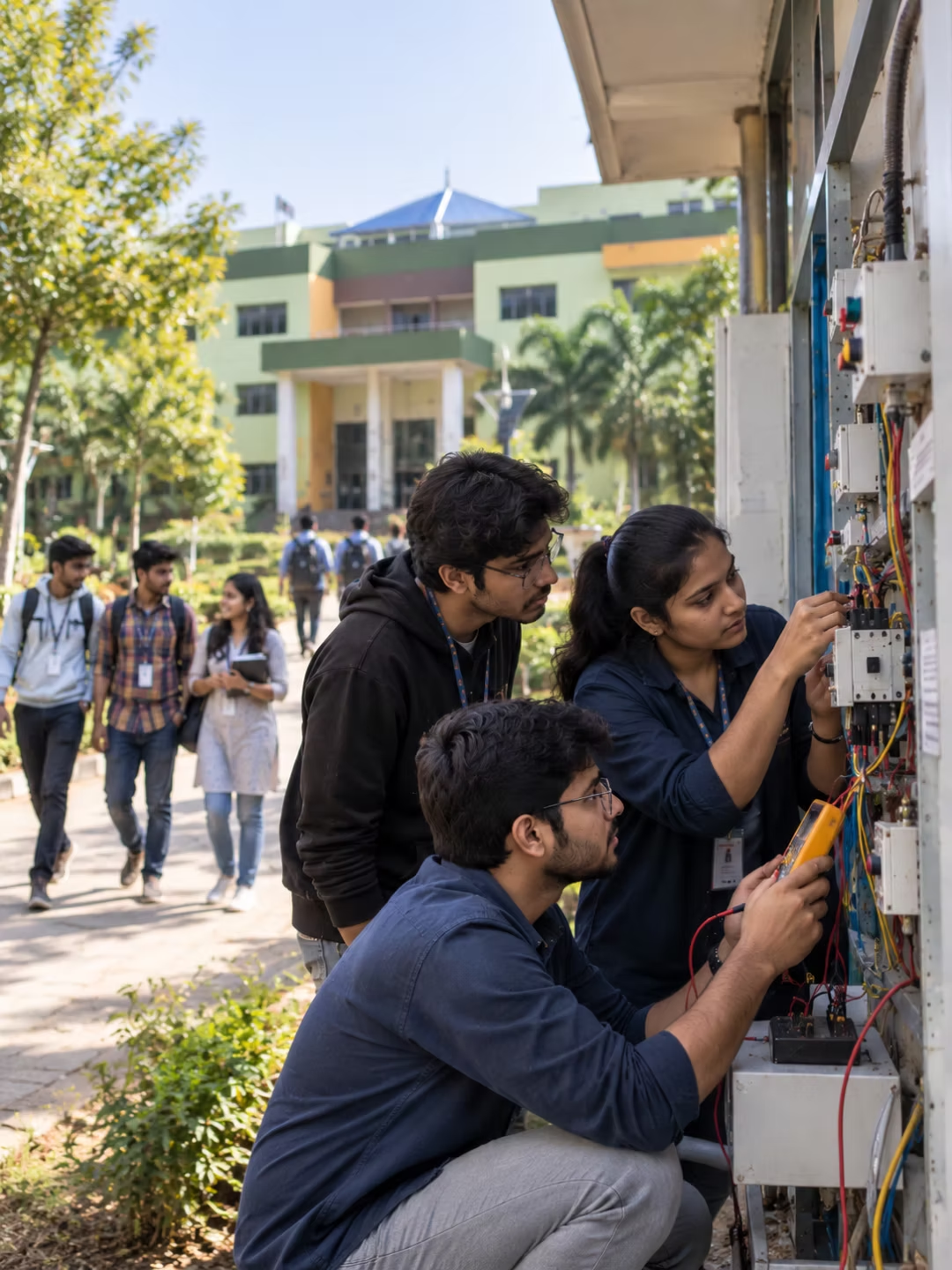
The Department of Electrical Engineering operates well-equipped laboratories allowing students to safely test heavy rotating machines, power electronic converters, and computerized control systems.
Electrical Machines Lab: Coupled DC motor-generator sets, 3-phase squirrel cage and slip ring induction motors, salient pole alternators, and 3-phase transformers.
Power Systems & Protection Lab: Transmission line models, differential protective relay test benches, overcurrent relays, and earth fault simulators.
Power Electronics & Drives Lab: SCR, MOSFET, and IGBT converter modules, speed control setups for DC and induction motors, and digital oscilloscopes.
Control Systems & Simulation Lab: High-performance PCs running MATLAB, Simulink, and PSPICE for bode plot analysis, root locus, and transfer function simulation.
Measurements & Instrumentation Lab: Kelvin's double bridge, Maxwell's bridge, energy meter calibration setups, and digital power analyzers.
Microcontroller & PLC Automation Lab: 8085/8051 trainer kits, ladder logic simulation boards, and stepper motor interfacing modules.
Projects & Hands-On Engineering
Students design and build physical circuitry, renewable energy prototypes, and automated systems for academic and community benefit.
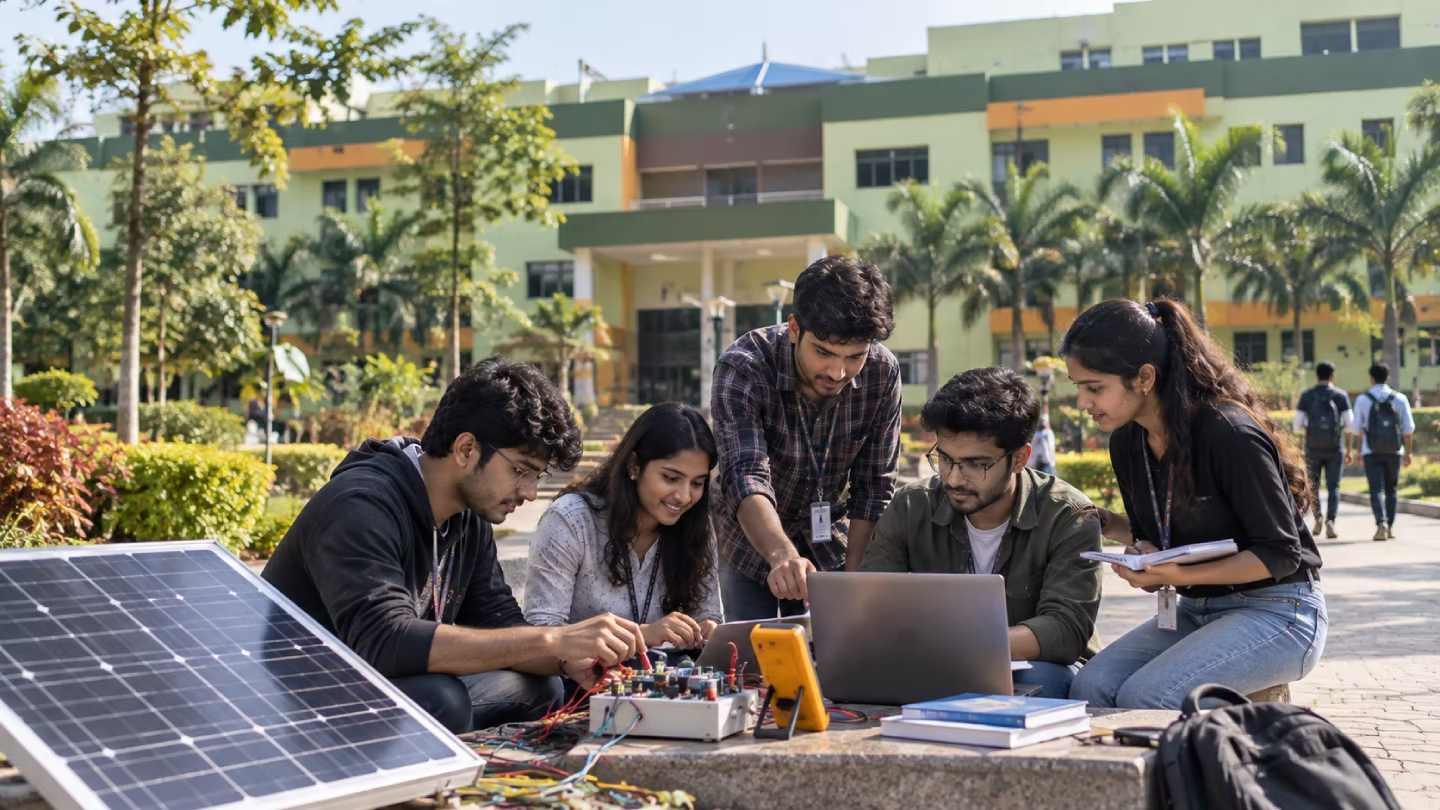
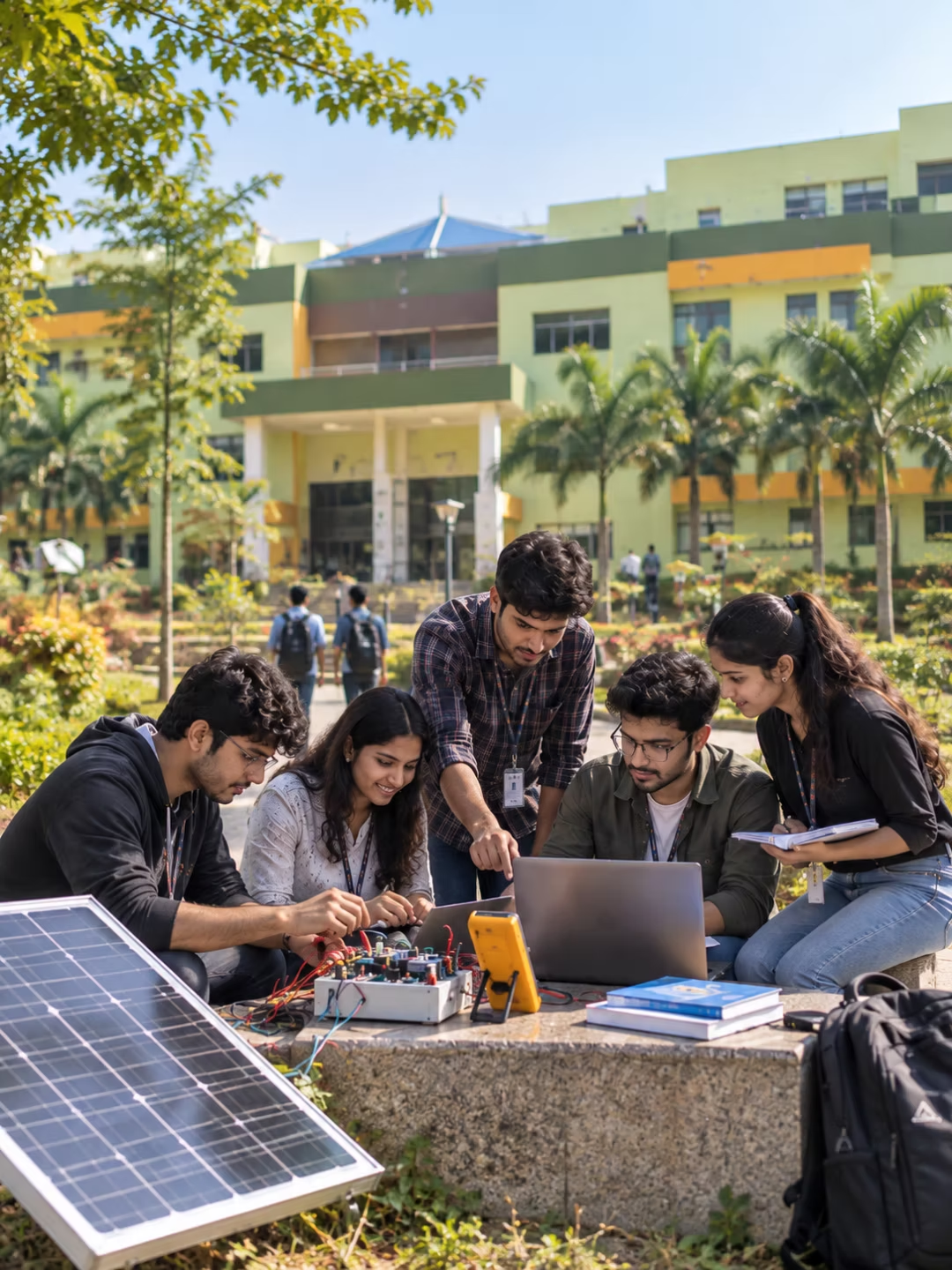
Solar PV Microgrid: Student-built rooftop solar tracking systems with battery charge controllers and MPPT algorithms.
Electric Vehicle Motor Drive: BLDC motor controller design and regenerative braking simulation for low-speed electric mobility.
Smart Energy Metering: IoT-enabled digital energy meter with GSM/Wi-Fi communication for remote electricity billing and theft detection.
Automated Substation Supervision: Microcontroller-based automated transformer oil temperature monitoring and fault trip signaling.
Skills Students Develop
A balanced mix of hard technical capabilities, engineering analytics, and workplace professionalism.
Technical Proficiencies
- Electrical Machine Operation, Synchronization & Load Testing
- Power Electronics Circuit Design & Inverter Prototyping
- MATLAB / Simulink Dynamic System Modeling
- Power System Single-Line Diagram & Fault Calculation
- PLC Ladder Logic Programming & Sensor Interfacing
- High-Voltage Safety Protocols & Circuit Breaker Maintenance
- Solar PV System Sizing & Energy Auditing
Professional & Workplace
- Electrical Industrial Safety Standards (IEEE / IS Codes)
- Single-Line Diagram (SLD) Interpretation & Documentation
- Preventive Maintenance & Inspection Scheduling
- Substation Switchyard Operational Procedures
- Technical Problem Reporting & Team Presentation
Analytical & Engineering
- Symmetrical & Unsymmetrical Fault Analysis
- Control Loop Stability & Frequency Response Diagnostics
- Power Factor Correction & Harmonic Mitigation Calculations
- Energy Efficiency & Load Forecasting
Career Opportunities & Placement Pathways
Electrical engineering graduates have extensive employment avenues across power transmission utilities, heavy equipment manufacturers, renewable solar corporations, electric vehicle startups, and software enterprises.
Key Job Profiles & Designations
Recruiting Industry Sectors
- •Power Generation, Transmission & Distribution Utilities
- •Electric Vehicles (EV) & Battery Storage Systems
- •Renewable Solar & Wind Energy Installations
- •Heavy Electrical Equipment & Transformer Manufacturing
- •Metros, Railways & Locomotive Traction
- •Steel, Cement, Petrochemical & Process Plants
Higher Studies & Competitive Exams
- •M.Tech in Power Systems / Power Electronics / Control Systems via GATE
- •Master of Science (MS) in Electrical Engineering abroad
- •Public Sector Undertakings (PSUs) via GATE: PGCIL, NTPC, BHEL, NHPC, DVC, WBSEDCL, WBSETCL
- •Indian Railway Technical Services & State Assistant Engineer posts
- •MBA in Energy Management / Operations
* Placement offers depend on individual academic records, technical aptitude, and employer recruitment evaluations. MIET organizes campus drives with power, manufacturing, and IT firms.
Industry Readiness & Employability Training
MIET collaborates with electrical utilities and industrial training providers to ensure graduates are practically skilled and safety-conscious.
Substation Technical Training: Guided tours and experiential learning at regional high-voltage grid substations in West Bengal.
MATLAB Power System Simulation Bootcamps: Hands-on modeling of IEEE bus test systems, load flows, and renewable integration.
PLC & SCADA Hands-On Workshops: Practical certification modules covering industrial automation hardware and sensor circuits.
Aptitude & Technical Interview Coaching: Dedicated problem-solving tracks covering circuit theory, machine questions, and logical aptitude.
Academic Resources & Infrastructure
Electrical engineering scholars enjoy full access to specialized testing laboratories, computer centers, and central library collections.
Research & Technological Innovations
Faculty and student researchers collaborate on green energy solutions, electric vehicle drive optimization, and smart grid automation.
Solar Micro-Inverter Efficiency: Investigating soft-switching topologies to maximize DC-to-AC conversion in rooftop solar setups.
EV Battery State of Charge Estimation: MATLAB simulation of Kalman filter algorithms for lithium-ion battery management.
Harmonic Mitigation in Industrial Loads: Active power filter design to eliminate line harmonics produced by variable-frequency drives.
Student Paper Publications: Undergraduate research presentations at regional and national IEEE conferences.
Student Alumni Success
Electrical engineering alumni from MIET are contributing to state power utilities, leading switchgear manufacturers, and multinational IT corporations.
“The extensive hands-on electrical machines and substation lab training at MIET gave me the practical knowledge and safety discipline to clear both written exams and technical interviews.”

Bikash Paul
Assistant Electrical Engineer • Regional Power Distribution Utility
Batch of 2024“MIET's MATLAB simulation labs, Book Bank scheme, and faculty mentoring in power electronics gave me a solid foundation to excel in modern power converter design.”
Ananya Dey
Power Electronics Design Associate • Industrial Automation Systems Manufacturer
Batch of 2023Authentic Programme Transparency
Verified & Approved by Academic Affairs CellFrequently Asked Questions: B.Tech in Electrical Engineering
Find clear answers regarding MIET College admissions, academic approach, campus facilities, and research initiatives.
What is the future outlook for B.Tech Electrical Engineering graduates?
What machinery is available in the MIET Electrical Machines lab?
Are diploma holders eligible for lateral entry into 2nd year B.Tech Electrical?
Does the electrical department teach simulation software?
Can electrical engineering graduates sit for IT and software campus placements?
Begin Your Engineering Journey in B.Tech in Electrical Engineering
Secure your seat at Modern Institute of Engineering & Technology (MIET). Approved by AICTE, affiliated with MAKAUT / WBSCTVESD, and located conveniently in Bandel, Hooghly.